It's Impossible to Read the Right Things

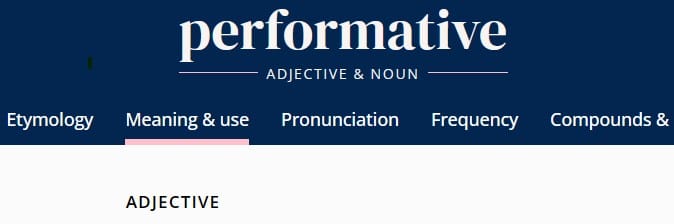
I happened to read two articles back to back last night, and the only conclusion I could reach is that when it comes to reading literature, you're damned if you do and damned if you don't.
First I read Brady Brickner-Wood on performative reading in the New Yorker (https://www.newyorker.com/culture/the-lede/performative-reading). This is when someone, usually a twentysomething man, reads a work of literature, usually something that could be described as a tome, in public where people can see his intellect at work. Brickner-Wood puts the focus more on the accuser, the person who declares another person to be reading performatively. The accuser is, like millions of people, so used to seeing everything online being done for likes, subscribes, affiliate marketing, product placement, or just plain clout that the idea of a someone sincerely reading Infinite Jest at a bar is unthinkable:
Performative reading has emerged as a suspicious activity not because reading books is suspect but because being beheld reading a book is understood to be yet another way for one to market himself, to portray to the world that he is indeed deeper and more expansive than his craven need for attention—demonstrated by reading a difficult book in public—suggests.
This is outside my own pet peeve the with current usage of performative. For about a century, it meant causing something to happen with an act of speech. Saying "I do" at the altar being the speech act that creates a marriage is a performative act. Voting "aye" is a performative act in the passage of a law or a statute or a rule at your workplace. It's now used to mean the mere performance of an act, like the performance of intellectual ability with your copy of Infinite Jest at the bar. Language is malleable, I am middle-aged, etc. etc. I know. It just had such a useful meaning before, and we already had performance, like, "He's just doing a performance of being intellectual hot shit with that copy of Infinite Jest at this bar." Full disclosure: twenty years ago, I absolutely did read Infinite Jest at a series of neighborhood bars, most of which are now gone. No one seemed to care.
The very next thing I read was Greta Rainbow's takedown of cozy lit for The Walrus—a truly great magazine if you haven't come across it before (https://thewalrus.ca/cozy-lit/). These books fall at the other end of the readerly spectrum, being short and uncomplicated and quiet. They're also aimed mostly at women.
This is vibes-based prose, meant to wash over you—a gentle titillation or linguistic ASMR, not because the prose is magnificent but rather it’s lulling, the literary equivalent of watching someone slice butter on TikTok. Episodic, formulaic, reliably satisfying.
But Rainbow provides a little twist to this analysis that makes it interesting. The genre comes to the US from Japan and Korea, where this literary style is not meant to be consumed but contemplated: "What Japanese and Korean authors craft as moments of quiet reflection are consumed in the West as instant gratification."
I'm not a cozy lit reader myself, but I can see the appeal, especially if you do read it more for slowing down rather than speeding through.
So, to recap last night's reading: man or woman, literary or popular, in public or on a sofa, readers cannot win. You might as well read what you like where you like to read it, whoever you are.
Get the Wingback Workshop RSS feed here: https://wingbackworkshop.com/rss
Follow the Wingback Workshop on the Fediverse (including Mastodon): @khg@wingbackworkshop.com
Buy KHG's books on Bookshop.org: https://bookshop.org/shop/khg
Sign up for the Wingback Workshop email newsletter using the Subscribe button in the bottom right-hand corner of your screen.