Review: Ambivalence, Brian Dillon

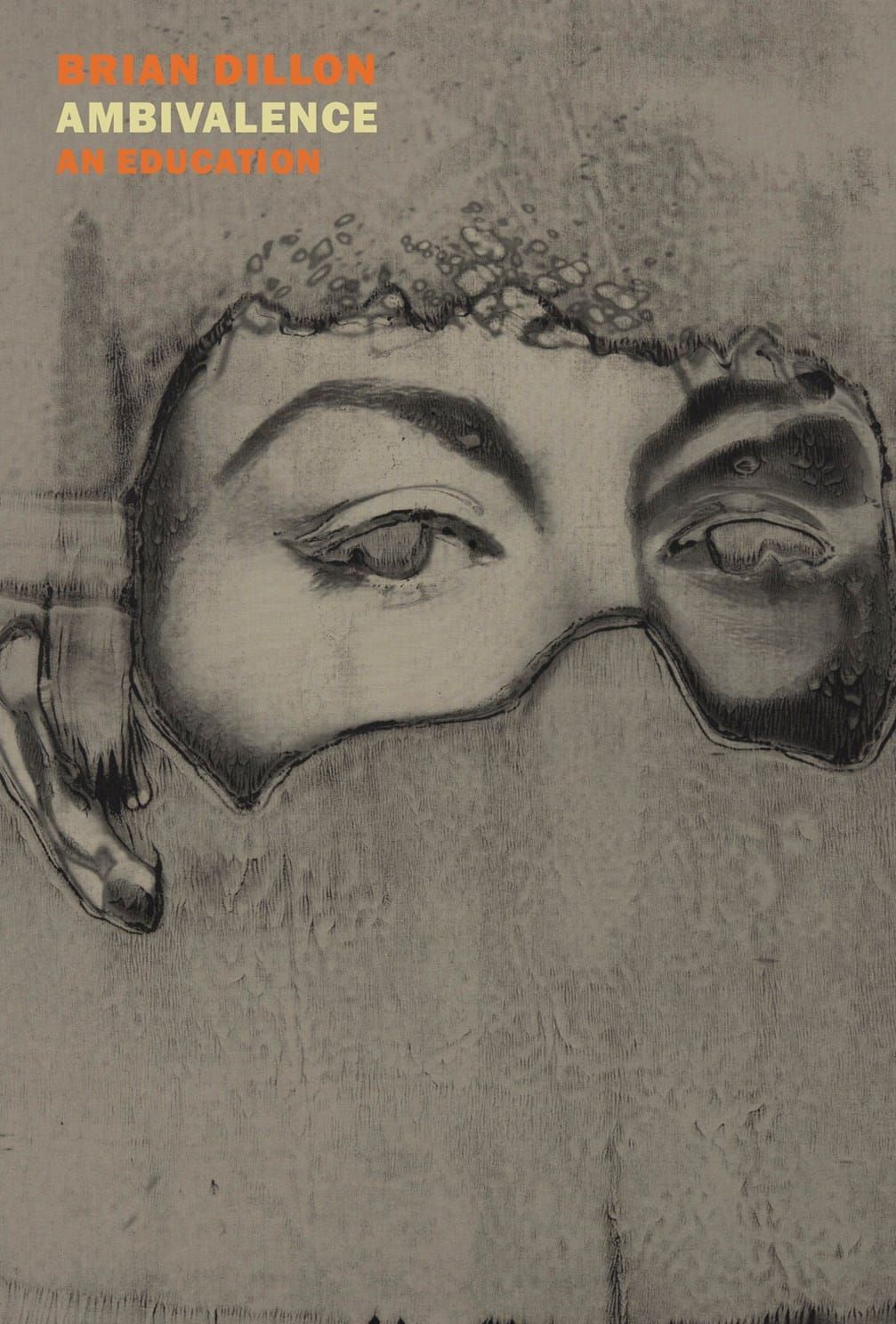
Ambivalence: An Education, by Brian Dillon
September 2026, New York Review Books
Dear Brian Dillon,
I hope this email masquerading as a book review, or vice versa, finds you well.
Let’s start with the awkwardness of the conventional “Dear” as an opening to an email. Not every email needs a form of address at the top, but those written to people you have never met should say something, I think. “Dear” is left over from the days of letter writing, when people used endearments to open and close missives. We’ve had emails for decades, and yet we’ve never come up with a better, more modern, less intimate-sounding salutation for writing to an author you do not know at all and yet feel some kind of long-distance friendship with after reading his new book Ambivalence.
In a similar vein, I often wonder what pronouns to use in my essays and articles, what perspective to present. If I use “I,” is that unprofessional? Does it tip my work into the personal or the confessional, which is often occupied by or expected of women? How much of my self am I expected to share, as opposed to my ideas? Must I trade my first-person pronouns for the reader’s attention? I also distrust the academic we that indicates the author’s “own presence on the page, or rather not presence but a kind of ghostly or angelic proximity, showing the reader where to look, what to look out for, where we (always we) have already been.” I had a professor in my master’s program—in a class on book reviewing, no less—who wrote in the margin of my midterm, “Who is we?” I think about it with almost every essay. Can I assume all readers are extracting the same meanings and experiences from a text? I have noticed over the decades that what I experience and what others experience does not always match up. So I have come to distrust the rhetorical we, and one marginal comment from one professor cemented that opinion. For now. You have chosen to write the story of your young literary life in third person and used an initial for your name, B. It provides distance between the author and the reader, between the narrator and the protagonist (memoirs having protagonists just as novels do). But that distance also provides a cushion between two versions of one self that allows you to write more incisively of your past choices, or the choices you didn’t make as things happened around you, including the sudden death of your father when you and your brothers were young adults—barely adults at all.
Several beats of our lives run like a spliced and rearranged cassette tape: You discovered theory and criticism early and I discovered it late, but we both fell in love with it before taking on higher education. You tackled your advanced degrees at a more typical age, and I started my master’s in middle age.
When I was young, I had no idea how a PhD program worked or why a person would do one. My family expected me to attend university, and I did, graduating with a BA in anthropology and a minor in French and none of us had a clue in the world what I was supposed to do with that combo. So I got jobs—terrible temp jobs—while I wrote. I tried poetry, I tried novels, I tried short stories. The works that worked best were essays, a bright gold arrow pointing the way that I would ignore for decades. I, like you, distracted myself with any friend who was up for conversation and whiskey rather than sitting at my desk. And when the group moved on to the next venue, it never occurred to me, as it never occurred to you, “to leave early, to be away from [my] friends at the end of the night.” But that was decades ago. Now there is nothing I like better than to leave early.
“Always on your mind,” you write, slipping into the second person usage in the same way that French uses the third-person pronoun on and that I wish we had in English for its general, even universal, ungendered, unnumbered convenience,
is the prospect of wasting your life, which means doing what you are told and doing it poorly, but well enough to find, in time, a job and a station in life that will blight all ambitions and all attachments to art, language, thought desire.
I wished for that ambition-blunting, socially acceptable job for too long. Lucky for me, and for you, I never got that wish. It probably wasn’t luck. I ended up in journalism, “a kind of racket,” according to your father, and I do not disagree, especially since I worked in automotive journalism. I too was “in love with the flash and dare of sentences and paragraphs expression judgment, opinion, experience,” but these were difficult facets to work into a review of a Camaro, though I tried and occasionally succeeded. And sometimes my flash and dare were whittled away by an editor who just wanted to tell potential buyers what features they would and would not find in any particular model.
We share a love for theorists and philosophers like Roland Barthes and Walter Benjamin, RB and WB in your shorthand. You found these writers when you were young, in your formative years, as they say; I didn’t find them until I was in my forties. I still think these authors were formative for me, though most people would consider middle age past the point of being formed. Not me. I have plenty of forming still to be done. I only completed my master’s in English language and literature last year; I considered a PhD, but at this age? In this economy? I figure I’ve made taught myself and cobbled it together for this long as a freelance writer and book editor, I might as well return to the precarious devil I know after those three glorious years of academic rigor and high expectations. As you write of Benjamin, I am “ever after condemned (or elevated) to the life of a freelance intellectual,” though intellectual may be overstating my case. I have also said to myself, and probably out loud to others, “No matter how bad things get, I must not ever have a full-time job.” Your twentysomething obsession with the italics of the French theorists is here fully justified, though it sometimes can be a bit much for a reader.
I’m a little jealous of the fact that you figured out that afternoon is when your work works best. When I started my freelance life, I took too seriously the advice to maintain a daily job-like schedule. I kept regular hours, between nine and five Monday through Friday, and I never worked in my pajamas. Then, of course, there’s the perennial advice to wake at dawn and write before your mind knows what it’s doing. Alternatively, the other end of the day is romanticized by those who work into the wee hours. I am neither early bird nor night owl. What kind of bird likes the middle of the afternoon, with a second wind around sunset? Probably some little brown bird who is “waiting for that portion of the afternoon when the disquiet of the morning and the distractions of the evening are equally distant and it seems like he is properly immersed in the work he claims to be doing.” You and I are that little brown bird.
You mention in an aside that you “have come to distrust the jargon of hybrid forms—‘autotheory,’ ‘creative-critical,’ writing, etc.—as having already missed the point: if you have to put such a name on it, you have not yet let go of the old categories.” I think this is the work I’m currently claiming to be doing with this personal essay-review. My grasp of what people mean when they talk about hybrid forms is tenuous at best anyway, so from now on I’ll brandish your argument to justify, or conceal, my confusion, much as I would have in my twenties.
Kind regards,
Kristen
All links to Bookshop.org are affiliate links that help keep The Wingback Workshop working. Thank you for your support!
Sign up for the Wingback Workshop email newsletter (including the email-only Sawdust!) using the Subscribe button at the bottom of your screen. Paid subscriptions buy me time to write more essays for the newsletter.
Get the Wingback Workshop RSS feed here: https://wingbackworkshop.com/rss
Follow the Wingback Workshop on the Fediverse (including Mastodon): @khg@wingbackworkshop.com
Buy KHG's books on Bookshop.org: https://bookshop.org/shop/khg